Coffee Date Gal Pals Clipart: An Embroidery Review
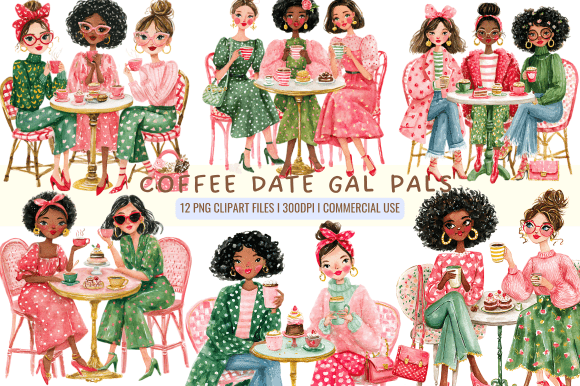
As a designer who spends more time behind an embroidery machine than a computer screen, I approach digital graphics with a specific question: will this actually stitch well? When evaluating the Coffee Date Gal Pals Clipart pack, my focus shifts immediately from screen aesthetics to textile reality. This collection of 12 PNG illustrations captures a trendy, social vibe that is currently dominating the handmade market. However, translating stylish groups of friends enjoying lattes into a durable machine embroidery design requires careful consideration of line weight, detail density, and fabric compatibility. Here is my practical assessment for makers and shop owners looking to turn these design assets into profitable finished goods.
Translating Digital Illustrations to Stitch
The first impression of this clipart pack is undeniably charming. The mood is warm, inclusive, and fashion-forward, making it ideal for custom apparel and lifestyle products. As graphics, they are clean and visually balanced. But as potential embroidery files, we must analyze the complexity. These designs feature multiple figures, hair details, clothing folds, and small props like coffee cups. For a digitizer or someone using auto-digitizing software, this level of detail is a double-edged sword.
If you are converting these illustrations manually, you have control. You can simplify hair strands into fill stitch areas rather than trying to replicate every line with running stitch, which prevents thread breaks and puckering. If you are purchasing a pre-digitized version based on this art, scrutinize the stitch density. Areas where friends are overlapping or holding items often become dense spots that can needle-pierce delicate fabrics. The visual personality is fantastic for Etsy seller listings, but the technical execution determines whether the finished product feels like high-end boutique merchandise or a stiff, bulletproof patch.
Real-World Application: The Sweatshirt Test
To truly judge the viability of Coffee Date Gal Pals Clipart, I mentally placed it on a current best-seller in my shop: a heavyweight cotton sweatshirt. This is a classic use case for sweatshirt embroidery targeting the "girl gang" or friendship niche. In this scenario, the design needs to be substantial enough to hold its own against the fleece texture but not so heavy that it distorts the garment's drape.
I envision placing one of the group scenes on the center chest or as a large back print. Because the artwork features stylish attire, it pairs perfectly with modern streetwear aesthetics. However, sweatshirts are textured. Fine details in the faces or latte art might get lost in the fleece nap. My recommendation for this specific embroidery project would be to scale the design up to at least a 5x7 inch hoop size. This allows you to open up the spacing between stitches and ensures the expressions remain readable after washing. For a craft business, this design serves as an excellent anchor for a capsule collection, potentially paired with matching tote bag design elements for a cohesive product line.
Navigating Fabric Limitations and Hoop Sizes
While these designs shine on stable knits, they require caution elsewhere. I would hesitate to use the full group scenes on lightweight baby onesies or stretchy ribbed knitwear. The combination of multiple figures and accessories creates significant stitch count concentration. On thin or stretchy fabric, this leads to tunneling and distortion, regardless of how much stabilizer you use. For baby embroidery or lightweight tees, isolate single elements from the clipart pack—perhaps just the coffee cup or a simplified face—to maintain fabric integrity.
Dark fabrics present another challenge. These illustrations likely rely on color contrast for definition. When stitching on black or navy garments, ensure your digitizing includes adequate underlay to prevent the fabric grain from showing through lighter thread colors. Additionally, avoid placing these detailed group designs on curved surfaces like caps. The distortion required to wrap a flat graphic around a curved brim often ruins the proportions of human figures. Stick to flat surfaces like pillow covers, aprons, or tote bags where the geometry remains true.
Commercial Value and Customer Perception
For commercial embroidery ventures, the perceived value of the product hinges on clarity. Customers buying a personalized gift or a small shop product expect professional results. If the faces in the Coffee Date Gal Pals Clipart design look muddy or the lattes resemble blobs due to poor digitizing, trust evaporates. Conversely, when executed with proper satin stitch borders and clean fill areas, these designs communicate warmth and connection that generic stock art cannot match.
This emotional resonance drives sales. In the saturated market of holiday embroidery and friendship gifts, specificity wins. A design that looks like a genuine moment between friends performs better in printable mockups and social media ads than abstract patterns. Just ensure you verify the licensing terms before selling. Confirm whether the original clipart license permits commercial use in physical handmade products or if it restricts usage to digital projects only. Protecting your business starts with respecting intellectual property.
Essential Designer Notes Before You Stitch
Before committing these beautiful graphics to fabric, follow this practical checklist to ensure success:
- Test on Scrap Fabric First: Never run a new digital embroidery file directly on a sellable garment. Use a scrap of the exact material and stabilizer combination you plan to use for the final embroidered patch or apparel item.
- Audit Small Details: Zoom in on the digitized file. Any text smaller than 4mm or facial features under 2mm may need to be removed or simplified to prevent needle damage and visual clutter.
- Check Thread Contrast: View your color chart in grayscale. If adjacent areas blend together without color, they will also blend in tone-on-tone embroidery. Adjust stitch density or add texture differentiation.
- Stabilizer Selection: For these multi-figure designs, use a cut-away stabilizer for knits and tear-away for wovens. Consider a water-soluble topping for textured fabrics to keep the applique design elements crisp.
- Mockup Verification: Create both light and dark background mockups. What pops on white might disappear on charcoal. This step is crucial for accurate Etsy seller listings and managing customer expectations.
- Wash Testing: If selling kitchen towels or items requiring frequent laundering, wash your test swatch three times. Check for thread pull-out or shrinkage around the dense stitch areas.
The Coffee Date Gal Pals Clipart pack offers immense creative potential for makers who understand the translation from pixel to stitch. By respecting the technical constraints of embroidery while leveraging the design’s inherent social appeal, you can create custom apparel and gifts that resonate deeply with buyers. Always prioritize stitch quality over visual complexity, and your finished product will reflect the professionalism your brand deserves.